
Most people who ask what does a pathologist do get an answer about microscopes and lab work. Biopsies. Blood panels. Maybe some mention of cancer staging. Fair enough. That’s a huge part of it. But it leaves out an entire branch of the profession that operates under completely different rules, and gets paid on a completely different basis.
Forensic pathologists investigate how and why people die. If you want the full picture of what does a pathologist do, this side of the profession has to be part of the answer. They do this work for the government, mostly, and they do it under legal scrutiny that diagnostic pathologists never face. The pay reflects that. Sometimes favorably, sometimes not. It depends on where you look and what you’re counting.
Key Takeaways
- Forensic pathologists usually earn less base salary than hospital pathologists, but benefits, pensions, and retention incentives can narrow the gap considerably.
- A severe national shortage of forensic pathologists is driving some jurisdictions to offer unusually generous pay and loan repayment packages.
- Autopsy and medicolegal work comes with scheduling, emotional, and legal demands that belong in any honest compensation analysis.
- Contract terms in forensic roles frequently include provisions around call, testimony, and caseload limits that change the real value of the salary.
- Predictable government income, when paired with disciplined financial planning, can be a genuine accelerator for long term wealth.
Table of Contents
What Forensic Pathologists Actually Do
What does a pathologist do when the patient is already dead? Figure out why they died. That’s the short version.
The longer version involves autopsies, toxicology interpretation, medical record reviews, scene investigations, detailed case reports, and testimony in criminal and civil proceedings. Forensic pathologists typically work for a medical examiner or coroner’s office. Government funded, government run. The work serves law enforcement, public health agencies, and families who need answers about a death that wasn’t expected.
It’s a different planet from surgical pathology. A hospital pathologist signs out cases in a controlled environment with predictable turnaround times. A forensic pathologist might get called to a death scene at 2 AM, spend the morning doing an autopsy on a decomposed body, and then get subpoenaed for a trial that afternoon. I’m exaggerating slightly, but not by much.
The legal exposure alone sets this apart. Every report a forensic pathologist writes could end up as evidence. Every opinion could be challenged under cross examination. That’s not a hypothetical. It’s the job.
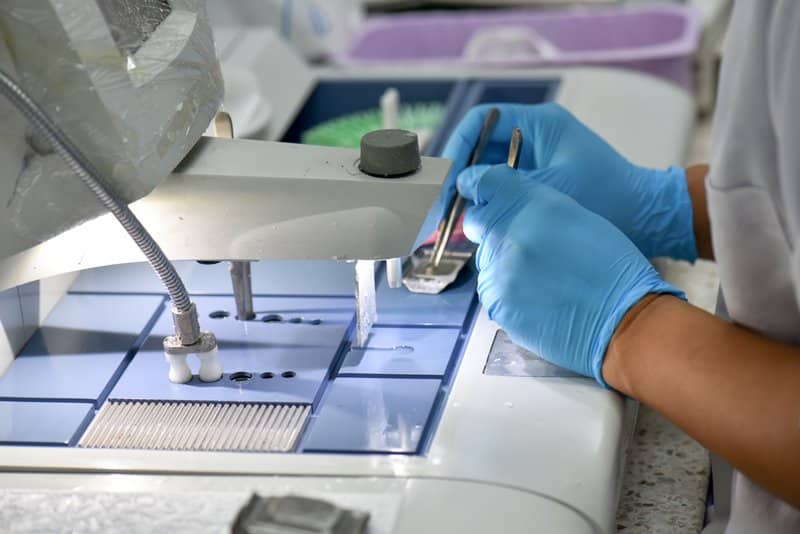
The Rhythm of Autopsy Work vs. Lab Pathology
Forensic work doesn’t follow the same cadence as diagnostic pathology. Not even close.
In a hospital lab, case volume is relatively steady. You can plan your week. Forensic caseloads are driven by how many people die in your jurisdiction, and that number moves around. An opioid surge, a heat wave, a mass shooting. None of that is on a schedule. And when cases pile up, the pressure to move quickly bumps against the legal requirement to be thorough.
Then there’s what you’re actually looking at. A surgical pathologist examines tissue. A forensic pathologist examines bodies. Bodies of children sometimes. Bodies that have been in water for days. Bodies from violent crimes. That’s not something you just get used to, despite what the TV shows suggest. The pathologists who last in this field are the ones who develop real strategies for managing the psychological toll. The ones who try to tough it out without addressing it tend to leave. Or worse.
All of which feeds back into compensation. What does a pathologist do in a forensic office versus a hospital lab? Different enough that you can’t recruit and retain people for work like this by offering the same package you’d give a clinical pathologist reading Pap smears in a suburban hospital.
The Workforce Shortage That’s Reshaping Pay
Here’s where the money conversation gets interesting.
There are maybe 750 to 800 board certified forensic pathologists working full time in the U.S. right now. The National Association of Medical Examiners has estimated the country needs 1,200 to 1,800 to provide adequate coverage. So we’re short by at least a third, and possibly by more than half.
About 40 new forensic pathologists become board certified per year. Some of them don’t even go into practice. The pipeline has been inadequate for decades, and then the opioid epidemic blew a hole through whatever capacity the system had left. NAME says forensic pathologists should cap at 250 autopsies a year, 325 absolute max. A 2019 survey showed 37% were already past the 250 line.
What happens when there aren’t enough people to do the work? Autopsies get delayed. Families wait weeks or months for cause of death determinations. And the jurisdictions that are most desperate start opening the checkbook. Enhanced salaries, signing bonuses, relocation packages, student loan repayment. Some offices have turned to locum tenens pathologists just to stay afloat.
But even with all that, forensic pathologist salaries still tend to lag behind hospital pathology. The numbers float around depending on which survey you trust, but averages for forensic work generally land in the $200,000 to $270,000 range. Hospital and lab pathologists, especially those with productivity incentives or ownership stakes, can clear $300,000 or more.
Comparing Forensic and General Pathology Income
You can’t just line up two salary numbers and call it a comparison. What does a pathologist do varies so dramatically between forensic and hospital settings that the comp structures barely resemble each other.
General pathology compensation is wildly variable. Some pathologists are W-2 hospital employees. Others are partners in a group. Others own reference labs. The financial structures are so different that “average pathologist salary” is almost a meaningless figure without a lot of context around it.
Forensic pay is simpler. Salary, benefits, done. Government pay scale. Maybe a bump for call coverage or hazardous duty. But the benefits tend to be genuinely good. Defined benefit pensions are becoming rare in medicine, but they’re still common in public sector forensic positions. Good health insurance, reasonable PTO, retirement plans that actually compound over a career.
When you account for total compensation, not just the number on the offer letter, forensic roles look more competitive than they first appear. A $230,000 salary with a pension that will pay you $80,000 a year in retirement is a very different financial proposition than a $310,000 salary with a 401k match and nothing else.
Public Sector vs. Private Forensic Practice
Almost all forensic pathologists are public employees. That’s the model. Medical examiner offices, coroner systems, state labs.
Private forensic work exists, but barely. Independent autopsy services, consulting practices, expert witness firms. The per case fees can be higher. The long term picture is shakier. No pension, no institutional backup, no guaranteed caseflow. You’re essentially running a small business on top of practicing medicine. Most forensic pathologists didn’t go through a fellowship so they could also learn QuickBooks.
The public sector path wins on stability and benefits. It loses on ceiling. That’s the fundamental trade off, and it’s one every forensic pathologist confronts.
What Does a Pathologist Do, Really, on the Forensic Side?
To understand what does a pathologist do across the full profession, the forensic piece can’t be ignored. Even though fewer than 3% of all pathologists specialize in forensics, it occupies a disproportionate share of public awareness. Blame CSI for that.
The actual daily experience is a lot less cinematic. Paperwork. Phone calls to next of kin. Dictating autopsy reports. Waiting to testify. The courtroom scenes happen, sure, but they’re not most of the week. Most of the week is careful, methodical documentation of findings that have to hold up under legal scrutiny.
For physicians evaluating pathology as a career, or for practicing pathologists considering a lateral move into forensics, the financial and lifestyle differences between forensic and diagnostic work are significant enough to warrant serious analysis. Not because one is better than the other. Because they’re genuinely different jobs with different reward structures.
The Scheduling and Emotional Reality
Money isn’t everything, obviously. You hear that all the time and it’s annoying because it’s true.
Forensic pathologists work irregular hours. On call coverage is standard. Death scene calls happen whenever they happen. Court dates are set by judges, not by you. And the emotional component of this work is not trivial. You are looking at dead people every day. Some of them died horribly. Some of them are kids.
Offices are starting to recognize this. Some provide mental health resources, peer support programs, structured debriefing after particularly difficult cases. But plenty of offices don’t. The culture in forensic pathology has historically leaned toward stoicism, and that’s changing slowly.
Any real compensation analysis needs to factor this in. A salary number divorced from the actual experience of earning it doesn’t tell you much about what does a pathologist do for that money, or whether it’s worth it.
Geography and Pay
Where the job is located changes everything.
Rural jurisdictions with serious recruitment problems tend to offer the sweetest deals, partly because what does a pathologist do in those settings often means covering a massive geographic area solo. Higher base pay, housing help, relocation money, loan repayment. The flip side is that you might be the only forensic pathologist covering a huge territory, with nobody to share call or absorb overflow cases when things get heavy.
Urban offices may pay less up front but come with academic appointments, research time, teaching opportunities, and colleagues down the hall. The total value of a position like that can be high, even if the salary itself is modest by physician standards.
The Association of State and Territorial Health Officials has documented the various strategies states are using to address forensic pathologist shortages, including visa programs, fellowship funding, and loan forgiveness. Progress has been uneven, but the fact that it’s a policy priority at all tells you something about how acute the problem is.

Financial Planning With a Government Salary
Government salaries don’t swing with case volume. There’s no RVU anxiety. No worrying about whether your biggest referral source is going to switch to a competitor.
That stability is underrated. Predictable income makes it easier to automate savings, stick to an investment plan, and build wealth steadily over time. It removes a variable that trips up a lot of high earning physicians whose income bounces around from year to year.
Yes, the ceiling is lower. You’re not going to get rich on a medical examiner salary. But you’re also not going to have a year where your income drops 30% because a health system restructured its pathology department. For some physicians that reliability, that lack of financial drama, is worth more than the upside they’re giving up.
What to Watch for in Forensic Pathology Contracts
These contracts have more moving parts than you might expect.
Call coverage obligations, caseload caps, expert witness provisions, liability clauses, non-compete language. Each one has implications for how much you actually work, how much stress you carry, and what happens if things go sideways. A contract that promises $260,000 but has no caseload ceiling and requires unlimited on call availability is not actually a $260,000 job. It’s a burnout machine with a nice sticker price.
Understanding what does a pathologist do in a forensic position, specifically and daily, is the only way to evaluate whether a contract is fair. You have to know what the job actually entails before you can judge whether the terms match up. Get help reviewing it. This is exactly the kind of situation where a second set of eyes pays for itself.
Building Forensic Work into a Longer Career
Not everyone who does forensic work does it forever. And not everyone who does it makes it their whole practice.
Some pathologists spend decades in a medical examiner’s office and never look back. Others do forensic work for a stretch and then transition to diagnostic pathology, or vice versa. Some maintain a split practice. The point is that forensic work can be a chapter, not just a destination.
The physicians who do best are the ones who think about how forensic work fits into a broader career arc and financial plan. The stability and public service elements are real draws. So is the sense of purpose. Whether those things outweigh the lower pay ceiling and the emotional demands is something each physician has to decide for themselves.
Conclusion
Forensic and autopsy work changes the shape of a pathology career in ways that go well beyond the salary line. The workforce shortage is real and it’s creating opportunities, but the legal responsibilities, the emotional costs, the irregular hours, and the contract complexity all matter when you’re deciding whether a forensic role is right for you.
Looking at this through a purely financial lens misses the point. Looking at it without any financial lens also misses the point. The pathologists who make the best decisions here are the ones who look honestly at what does a pathologist do in a given role and weigh all of it together.
Physicians Thrive works with pathologists to evaluate compensation structures, review contracts, and build financial plans that make sense for the long haul. Reach out today to start the conversation.