Social media and email accounts. Creative works, photos and keepsakes kept on home computers, the cloud or external storage drives. E-commerce accounts. Domain names. Bitcoin. These are all examples of digital assets. You will manage them closely as long as you live – but what will happen to them once you die?

Financial Planning
Investing in Agreement With Your Beliefs
The case for aligning your portfolio with your outlook & worldview.
Provided by Justin Nabity
Do your investment choices reflect your outlook? Are they in agreement with your values? These questions may seem rather deep when it comes to deciding what to buy or sell, but some great investors have built fortunes by investing according to the ethical, moral and spiritual tenets that guide their lives.
Sir John Templeton stands out as an example. Born and raised in a small Tennessee town, he became one of the world’s richest men and most respected philanthropists. Templeton maintained a lifelong curiosity about science, religion, economics and world cultures – and it led him to notice opportunities in emerging industries and emerging markets (like Japan) that other investors missed. Believing that “every successful entrepreneur is a servant,” he invested in companies that did no harm and which reflected his conviction that “success is a process of continually seeking answers to new questions.”1
Special Needs Trusts
If you have a child with special needs, you face long-run financial demands that cannot be fully met through federal and state assistance. What can you do to try and meet them?
When a Minor is a Beneficiary
Naming a minor as a beneficiary brings up a major concern. If parents or grandparents make a child a primary or contingent beneficiary of an insurance policy, IRA or investment account, they should be aware that most policies and investments will not directly transfer to a minor. They need to be received by a court-approved property guardian, a trustee of a children’s trust, or a revocable living trust beforehand.1
6 Major Risks to Family Wealth
All too often, family wealth fails to last. One generation builds a business – or even a fortune – and it is lost in ensuing decades. Why does it happen, again and again?
It is because families fall prey to serious money blunders – old and new. Classic mistakes are made, and changing times aren’t recognized.
Why You Should Look for a Registered Investment Advisor
Who should manage significant wealth? In recent years, more and more high net worth households have found their answer to that question: a Registered Investment Advisor.
An IRA – A Simple First Step in a Physician’s Retirement Plan
Retirement planning can easily start with these accounts.
When a physician decides to start saving for retirement, taking that “first step” can seem like a big deal. Opening an Individual Retirement Account (IRA) amounts to an easy “first step” in many physicians’ retirement plans.
When you invest through a traditional or Roth IRA, you give those invested assets the potential to grow with compounding and you also position yourself for present or future tax savings.
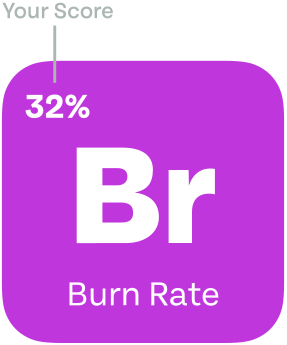
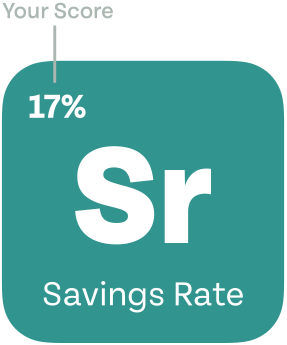
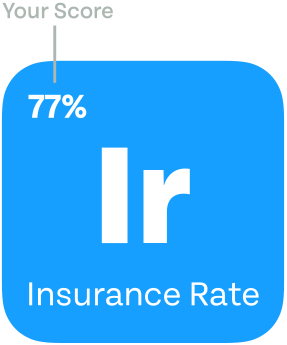
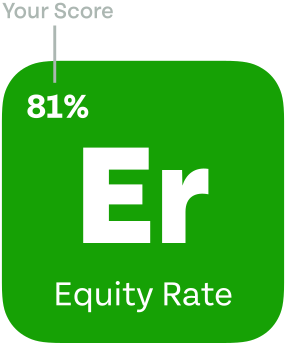
What’s Your Financial Health Score?
Can a 5-question test predict how wealthy you will become?
In the future, will you become wealthier or poorer? Who knows, right? It seems like you would need a crystal ball to really answer that question given life’s up and downs. What if the answer is right in front of you? What if you can determine it from your present financial behaviors? Two economists present a brief questionnaire – and an audacious claim that these five questions can predict your financial future.
Saving & Investing In Your Family’s Growing Years
It may seem like a tall order, but it can be accomplished.
If you have a young, growing family, no doubt your to-do list is pretty long on any given day. Beyond today, you are probably working on another kind of to-do list for the long term. Where does “saving and investing” rank on that list?
Plan to put yourself steps ahead of your peers.
For some families, it never quite ranks high enough – and it never becomes the priority it should become. Assorted financial pressures, sudden shifts in household needs, bad luck – they can all move “saving and investing” down the list. Even so, young families have planned to build wealth in the face of such stresses. You can follow their example. It is less an option than a necessity.
How to Work With An Investment Advisor
When it comes to working with an investment advisor, the value you receive is based in the quality of the relationship you establish and his or her ability to meet, or even exceed, your expectations.
Most clients don’t mind paying a fee for investment advice, and many don’t expect their advisors to perform superhuman feats with their portfolios; however, they do expect their advisors to fulfill their commitment to providing superior service that includes frequent communications, transparency, and conflict-free guidance.